First voyage?
Take 10% off your first order with code MOTHERSHIP10.
First voyage?
Take 10% off your first order with code MOTHERSHIP10.

Original art. Festival ready.
✍️ Design Stories
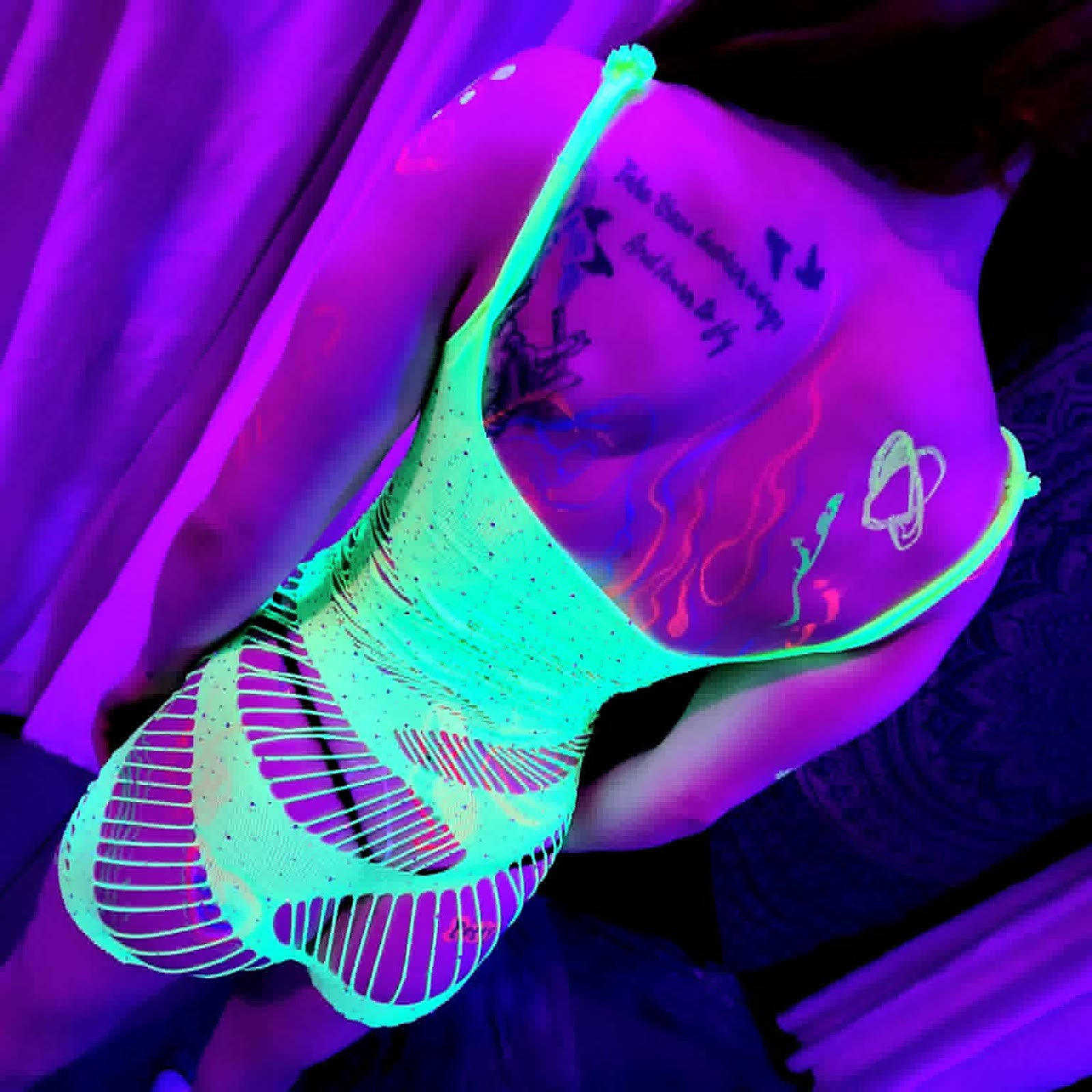
Every pattern begins as an original piece of art. A dream, an old pattern reborn, a doorway.
✍️ Design Stories
Every pattern begins as an original piece of art. A dream, an old pattern reborn, a doorway.

Wear the story.
Free Shipping on Every Order USA

June 07, 2026 6 min read
Dancing in a crowd feels transcendent because it stacks several powerful mechanisms at once: bodies involuntarily synchronize to a shared beat, synchronized movement releases endorphins and blurs the boundary between self and group, and music's anticipation cycles drive dopamine release. Sociology named the resulting state over a century ago: collective effervescence.
Eighty thousand strangers, one drop, and for a few seconds there is no difference between anyone in the field. Every culture in recorded history has built some version of that moment, which suggests it is not a party trick. It is equipment. Here is what science can currently say about how the equipment works.
In 1912 the French sociologist Émile Durkheim, studying the structure of religious ritual, identified the engine underneath: when people gather and move or chant in unison around a shared focus, a current of energy passes through the group that none of its members can generate alone. He called it collective effervescence, and he argued it is the raw material of the sacred itself. First comes the assembled, synchronized crowd and its electric feeling of unity; then come the symbols, stories, and gods that try to explain the feeling and summon it back.
Durkheim was writing about ceremonies, but his description, individuals dissolving into a single emotional body, energy that seems to arrive from outside, the sense that something larger is briefly present, reads like field notes from any great night on a dance floor. Modern researchers still use his term, and they have spent the past two decades finding the gears inside it.
You do not decide to nod along. Entrainment, the pull of the body toward an external rhythm, runs deeper than choice: motor regions of the brain activate to a strong beat even when you sit still, and groove research, the study of why some rhythms demand movement, finds the urge peaks for grooves with a steady pulse and just enough syncopation to keep the brain guessing.
The tempo is suspiciously familiar. Most dance music lives near 120 beats per minute, two beats per second, which happens to be the rhythm of brisk human walking. Four-on-the-floor at 120 is, mechanically, the sound of a body moving with purpose, and your motor system treats it as an invitation rather than information.
Here is the social part: everyone else's motor system received the same invitation at the same moment. A dance floor is hundreds of nervous systems being steered by one clock. Synchrony does not have to be negotiated. It is broadcast.
Three well-studied things, at minimum.
Endorphins. Researchers at Oxford ran experiments with silent disco setups in which strangers danced in or out of sync with each other. Dancers in full synchrony showed elevated pain thresholds afterward, the standard proxy for endorphin release, and reported feeling significantly closer to their partners, closeness on the level usually reserved for friends. Exertion plus synchrony was the strongest combination: moving hard, together, in time, is a chemical bonding agent.
Dopamine. Neuroimaging work on musical chills shows dopamine releasing not only at the peak moment but in anticipation of it, in the caudate as the build climbs, then in the nucleus accumbens at the payoff. Electronic music is practically engineered around that finding: the build, the filter sweep, the silence before the drop are anticipation machines, and a crowd riding one together is a thousand dopamine systems cresting on the same wave.
Boundary loss. Synchronized movement reliably blurs self-other distinction in experiments: people who move in time judge themselves more similar to their partners, trust them more, cooperate more. Anthropologists studying intense collective rituals describe identity fusion, a visceral oneness with the group that outlasts the event. The 2am feeling that the crowd is one organism is not a metaphor your tired brain invented. It is the documented output of the machinery.
Because it reaches you below the ears. Researchers at a Canadian concert lab famously added and removed very low frequency speakers during a live electronic set, frequencies near the edge of hearing, and tracked the audience with motion capture. When the deep bass was on, people danced measurably more, around twelve percent more, without noticing the change. Low frequencies recruit the vestibular and tactile systems, the body's balance and touch channels, so heavy bass is less like a sound and more like a hand on the small of the back saying go.
That is why the chest-hit of a real system matters, and why no phone speaker has ever caused a spiritual experience. Some doors only open from the sternum.
Darkness does two jobs. The first is chemical and visual: in low light your wide, light-hungry vision takes over, lasers and UV glow acquire that floating hyperreality, and, as we wrote in our piece on the science of glow, a crowd under black light becomes a field of constellations, every painted arm a landmark.
The second job is psychological. Bright light is social surveillance; darkness lowers self-consciousness, and the research on synchrony suggests self-consciousness is the main brake on joining the collective body. The dark releases the brake. Psychologists once called the group version of this deindividuation and treated it mostly as a danger. Festivals are the counter-evidence: tens of thousands of de-individuated humans, and the dominant emergent behaviors are dancing, gift-giving, and looking after strangers. Remove the self and what pours out, more often than not, is care.
Put the pieces in one place. A shared clock at walking tempo. Exertion in synchrony, releasing the bonding chemistry of endorphins. Anticipation cycles tuned to the dopamine system. Bass speaking directly to the body's balance channels. Darkness releasing the brake on self-consciousness. And Durkheim's century-old observation waiting at the end: gather humans, synchronize them, and something that feels sacred reliably shows up.
Festivals are not an escape from real life that humans invented recently. They are the current build of the oldest technology we have, the one every culture ships in some form: the rite of moving together until the boundaries soften. The fields and warehouses are the cathedrals this generation actually attends, and the congregation knows it, even when it would not use the words.
Our stake is simple and we will not dress it up much: we make gear for that congregation, garments with stories stitched into them and markers that turn the crew into constellations, because we think the moment deserves vestments. But the transcendence is not in anything we sell. It is in the synchrony, and the synchrony is free. It always has been. Find the clock, give it your pulse, and let the boundary go.
The drop is older than the drum.
Always Keep Exploring.
What is collective effervescence? A term coined by sociologist Émile Durkheim in 1912 for the electric sense of unity and energy that arises when a group gathers and acts in synchrony around a shared focus. He argued it is the experiential root of the sacred in human ritual.
Why does dancing with other people feel so good? Synchronized movement with exertion elevates pain thresholds, the standard marker of endorphin release, and increases feelings of closeness and trust. Anticipation in music also drives dopamine release. Together these produce euphoria and bonding beyond what solo dancing gives.
Why does bass make you want to dance? Very low frequencies stimulate the body's vestibular and tactile systems, not just hearing. In a live concert experiment, adding near-inaudible deep bass increased audience movement by roughly twelve percent without listeners noticing why.
Why is most dance music around 120 BPM? 120 beats per minute equals two beats per second, the approximate rhythm of brisk human walking. Rhythms in that range align with the body's natural locomotion tempo, making them the easiest to entrain to.
Is losing yourself in a crowd psychologically healthy? The research on synchrony and ritual suggests yes, in safe settings: identity fusion and collective joy increase bonding, cooperation, and well-being, and large studies of communal gatherings link them to lasting increases in social connectedness.
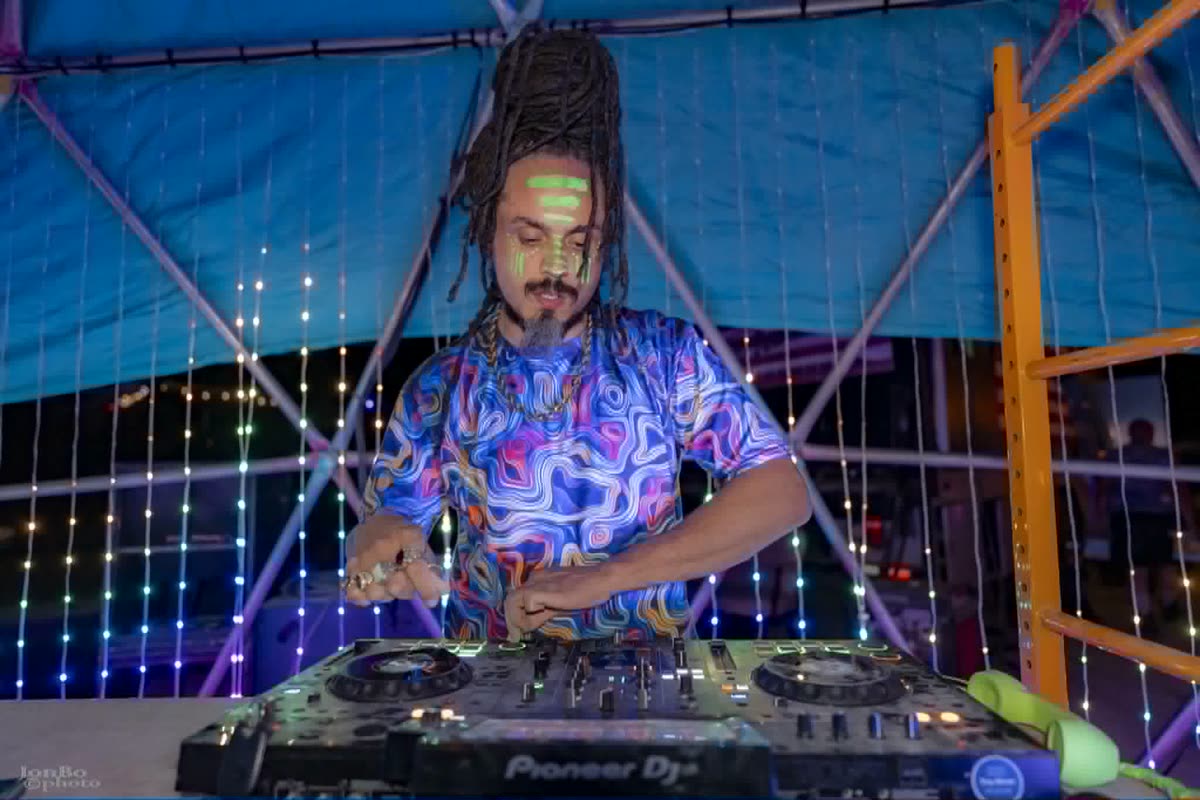
Spaceman is the founder of The Mothership Landing and the face on the markers box. Event producer, DJ, performer, designer, and structural integrator: he works with bodies by day and lights them up by night. Two decades in the transformational music festival and rave scene, in the fields and warehouses these transmissions come from. Always Keep Exploring.