First voyage?
Take 10% off your first order with code MOTHERSHIP10.
First voyage?
Take 10% off your first order with code MOTHERSHIP10.

Original art. Festival ready.
✍️ Design Stories
Every pattern begins as an original piece of art. A dream, an old pattern reborn, a doorway.
✍️ Design Stories
Every pattern begins as an original piece of art. A dream, an old pattern reborn, a doorway.

Wear the story.
Free shipping on orders over $100 • Mothership Markers ship free in the US

June 16, 2026 5 min read
Rave culture is what happens when a new kind of electronic dance music, a dark room, and a crowd of strangers who agree to look after each other collide. It began in the Black and queer clubs of 1980s America, crossed the ocean to ignite a British youth movement, and grew into the global festival world that millions move through today. The room got bigger and the lights got brighter, but the core has not changed in forty years: bodies, bass, darkness, and the strange tenderness of dancing with people you have never met.
Here is the short history of how the warehouse became the field.
The music came first, and it came from specific American cities and specific communities that deserve the credit.
In Chicago in the early 1980s, DJs in predominantly Black and gay clubs built a new sound on drum machines and a relentless four-on-the-floor kick. It took its name from one of the clubs, the Warehouse, and became house. A few hours away in Detroit, a parallel scene fused electronic experimentation with futurist imagination into something colder and more mechanical, and called it techno. Both genres were born out of marginalized communities making joy and freedom on cheap machines, and both were designed for one purpose: to keep a dancefloor moving.
This origin matters. Rave culture is sometimes told as a European story, but the engine was built by Black and queer Americans, and the genres they invented are the foundation everything else stands on. Any honest history starts there.
The spark crossed the Atlantic in the mid-to-late 1980s, and Britain caught fire.
British DJs and travelers encountered house and a new wave of acid house, defined by the squelching sound of a particular bass synthesizer, and brought it home to a generation primed for it. What followed, around 1988 and 1989, became known as the Second Summer of Love. Young people poured into clubs and then into illegal warehouse and open-air parties, dancing until dawn to music made for exactly that. The gatherings grew enormous, spread by word of mouth and pirate radio, often staged in fields and empty buildings beyond the reach of licensing.
The scale and the illegality eventually drew a government response, and the UK passed laws specifically targeting gatherings around music with, in the infamous wording, "repetitive beats." Trying to legislate a beat out of existence is the kind of thing that only makes the beat more beloved. The crackdown pushed the energy toward licensed clubs and, in time, toward the organized festivals that would define the next era.
As the scene grew, especially in America in the 1990s, it grew an ethos, and the ethos got an acronym: PLUR, for Peace, Love, Unity, and Respect.
PLUR was the dancefloor's social contract, the shared agreement that in here, we look out for each other. It is most visible in small rituals: checking on a stranger who looks overwhelmed, the tradition of trading handmade beaded bracelets called kandi, the basic understanding that the floor is a place to be free without being preyed on. The phrase is often traced to the early-1990s American rave scene and a DJ invoking it to calm a tense crowd, and whatever its exact first utterance, it named something the music had been gathering toward all along.
It is easy to be cynical about four words on a bracelet. But the idea underneath is real and rare: a temporary society of strangers who agree, for one night, that everyone gets to belong. People have built far worse philosophies on far more words.
The arc of the last thirty years is the rave growing up and going legitimate, for better and worse.
The illegal warehouse party became the licensed superclub. The superclub culture spread worldwide. And by the 2000s and 2010s, the open-field festival had become the dominant form, electronic dance music headlining enormous events on multiple continents, with production, lighting, and stage design that the warehouse generation could not have imagined. What was once hunted by helicopters became a multi-billion-dollar global industry with corporate sponsors and assigned camping.
Something is inevitably lost in that journey, and old-timers are right to mourn the rough, secret, self-organized magic of the early days. But something also survives the commercialization intact. Stand in a festival crowd at 2am, lights pouring over thousands of moving bodies, bass in your chest, a stranger beside you grinning at the same drop, and the lineage is unbroken. The field is just a warehouse that grew.
The deeper question is why any of this endured, and the answer is older than the music.
Humans have gathered to dance together in darkness for as long as there have been humans. Communal night dancing, around fire, under stars, now under LED, does something measurable to people: synchronized movement to a shared beat dissolves the boundary between self and crowd, floods the body with the chemistry of belonging, and produces a feeling of unity that is genuinely hard to find anywhere else in modern life. Rave culture did not invent that experience. It rediscovered an ancient one and gave it a new soundtrack and a new room.
That is why the form keeps surviving every crackdown, every commercialization, every obituary written for it. It is not really about the genre or the venue or the decade. It is about the oldest reason people come together at night: to stop being separate for a few hours. The technology changes. The need does not.
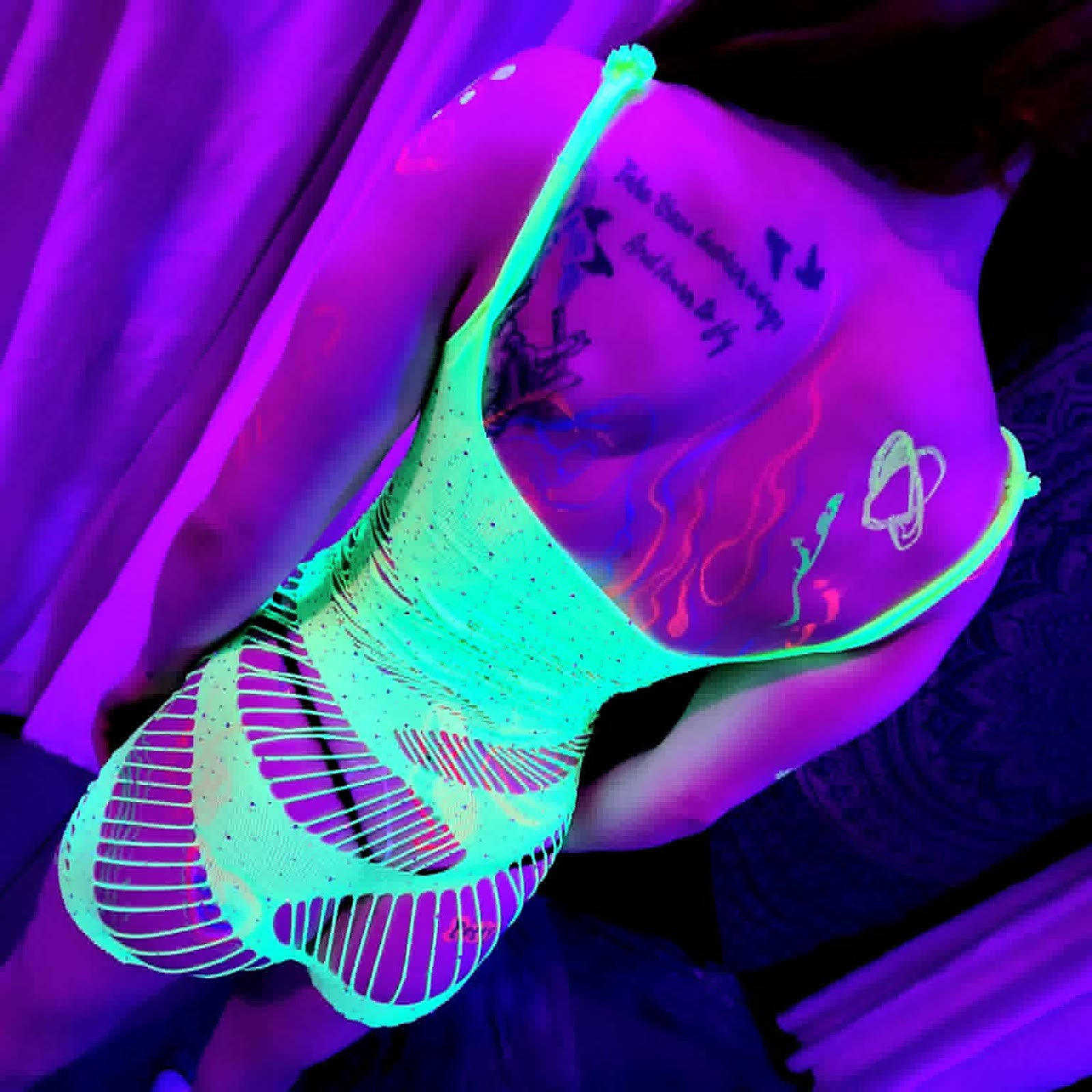
Our stake, plainly: we are a crew of performers, and this is the culture we make for. Everything in the line is built for the room this history describes, the dark, loud, connected space where strangers become a crowd and a crowd becomes, briefly, something larger. The Mothership Markers exist for the after-dark transformation that has always been part of the ritual, the painted body under moving light. The garments are made to move in that room and to glow when the black lights come up.
We did not start this. Black and queer Americans built the engine, British kids lit the fuse, and a thousand crowds since have kept it alive. We just make a little kit for the next night, and try to credit the people who made the night possible.
The dark is not dangerous. It is waiting.
Always Keep Exploring.
Rave culture is the movement built around electronic dance music, all-night dancing in dark spaces, and an ethos of looking out for one another. It began in 1980s American clubs, exploded in Britain in the late 1980s, and grew into today's global festival world.
House music was born in predominantly Black and gay clubs in Chicago in the early 1980s, and techno emerged in parallel in Detroit. Both genres were created by marginalized American communities and form the foundation of all later rave music.
A period around 1988 and 1989 when acid house and rave culture exploded across Britain, with huge numbers of young people dancing at clubs and illegal warehouse and open-air parties until dawn. It defined British rave culture and drew an eventual government crackdown.
PLUR stands for Peace, Love, Unity, and Respect, the social ethos of rave culture. It describes the dancefloor agreement to look out for one another, expressed through small rituals like checking on strangers and trading handmade kandi bracelets.
Synchronized movement to a shared beat in darkness dissolves the boundary between self and crowd and floods the body with the chemistry of belonging. Humans have gathered to dance in darkness for millennia; rave culture rediscovered an ancient experience with a new soundtrack.