Shop
Designs

Free shipping on orders over $100 • Mothership Markers ship free in the US

June 16, 2026 6 min read

Flow is the state where time disappears and the doing does itself. The self-talk goes quiet, the task and the doer stop feeling like two separate things, and an hour passes like a few minutes. You have almost certainly been there: lost in a set, a sketch, a climb, a dance, a deep stretch of work. The question is not whether you can reach it. It is how to set the table so it shows up more often.

Here is what flow actually is, the conditions that trigger it, and a practical way in.

What is a flow state?

Flow is a documented psychological state, not a vibe. The psychologist Mihaly Csikszentmihalyi named it after years of interviewing musicians, athletes, surgeons, and artists about their best moments, the times when the work seemed to carry itself. The word he kept hearing was a current, a sense of being swept along, so he called it flow.

In flow, several things happen at once. Attention narrows to a single point. The running commentary in your head, the part that worries and judges and checks the time, switches off. Action and awareness merge, so you are not thinking about doing the thing, you are just doing it. And the experience becomes its own reward; you would do it even if nothing came of it. That last part is the tell. When the activity stops needing a reason, you are in flow.

If that sounds like the state a dancer or a flow artist chases, that is not a coincidence. The flow arts borrowed this exact word on purpose, because the spinning prop is only a doorway, and the state on the other side of it is the actual destination.

The conditions that make flow possible

Flow is not random. It shows up reliably when a specific set of conditions line up, and you have more control over those conditions than you think.

Challenge meets skill. This is the big one. Flow lives in the narrow band where the difficulty of the task matches your ability almost exactly. Too easy and you get bored and drift off. Too hard and you get anxious and freeze. Right at the edge of your skill, stretched but not overwhelmed, the mind locks in. The practical version: pick something slightly harder than you can comfortably do, and the door opens.

A clear goal. Flow needs to know where it is pointed. Not a vague hope, a concrete target for the next stretch of time. Finish this one drawing. Land this one transition. Hold this one pose. When the goal is clear, attention has somewhere to go.

Immediate feedback. You need to be able to tell, moment to moment, whether you are getting it right. A musician hears the wrong note instantly. A climber feels the grip hold or slip. Activities with built-in, instant feedback drop into flow far more easily than ones where you cannot tell how you are doing until much later.

A task worth your whole attention. Flow cannot survive a split mind. It needs the kind of activity that asks for all of you, leaving no spare attention to wander off and start worrying.

Line those four up, and flow becomes much more likely. Miss them, and no amount of trying forces it.

A practical way in

You cannot will yourself into flow directly. Trying hard to relax is the fastest way to stay tense, and flow works the same way. What you can do is remove the obstacles and set the conditions, then let it arrive. Here is the sequence.

Clear the interruptions first. Flow takes a few minutes to build and a single ping to shatter. Turn off notifications, close the extra tabs, put the phone in another room. One uninterrupted block is worth more than a whole afternoon of fragments.

Pick one thing and define "done" for the next stretch. Not your whole list. One task, with a clear finish line for the next half hour. Specific beats ambitious.

Match the difficulty to your skill, then nudge it up. If it feels boring, make it harder, add a constraint, raise the standard, shorten the time. If it feels panicky, make it smaller, break off one piece you can actually handle. You are hunting for that edge where you are stretched but not drowning.

Commit to a warm-up you do not judge. The first few minutes of almost anything feel clumsy. That is not failure, that is the on-ramp. Flow rarely starts at minute one. Give it the ramp and stop grading the warm-up.

Let the activity take over. Once you are moving, stop watching yourself do it. The moment you notice "am I in flow yet," you have stepped outside it. Drop the question and return to the task. The state closes the gap on its own.

Movement is the fastest doorway for most people

For a lot of people, the quickest route into flow is not at a desk. It is through the body.

Physical, rhythmic, skill-based movement hits all four conditions at once. Dance, flow arts, climbing, skating, martial arts: each one gives you a clear goal, instant feedback, a challenge tuned right to the edge of your ability, and a demand for your full attention. The body is busy enough that the worrying mind finally has nothing to do but go quiet.

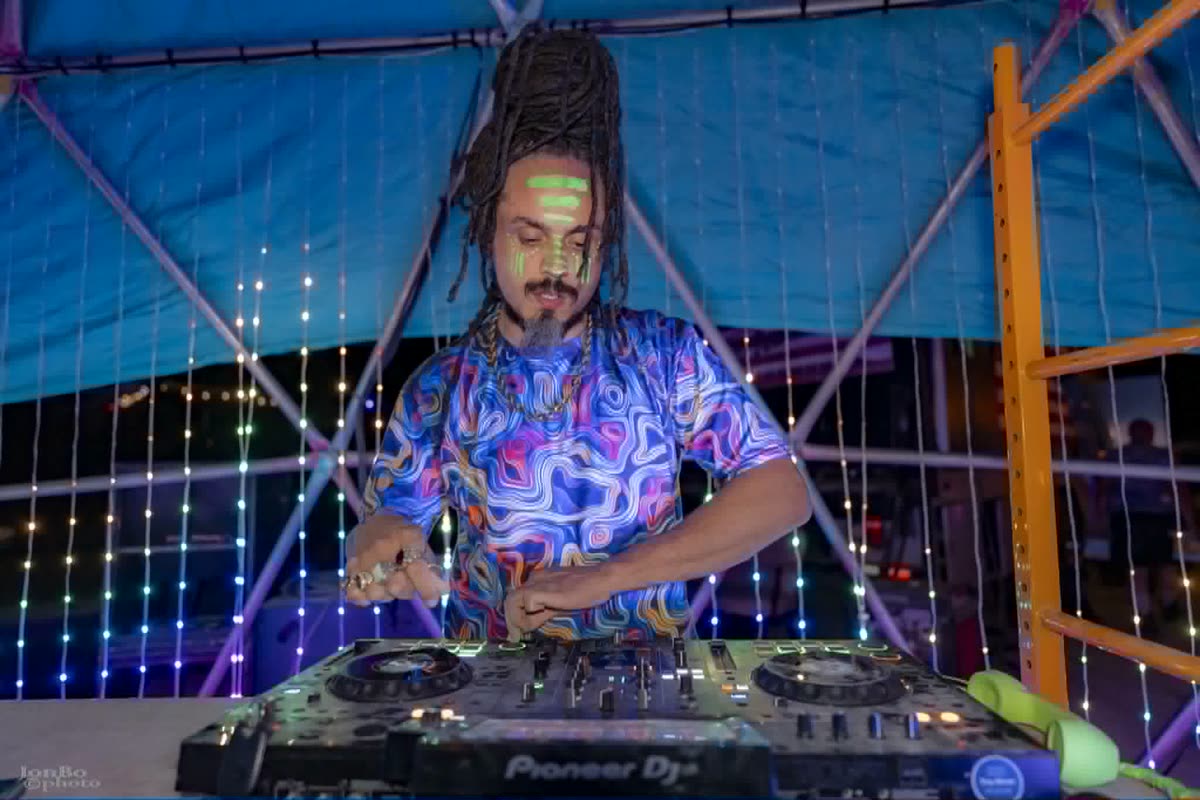
Add music and darkness and the effect deepens. A dancefloor is almost an engineered flow chamber: a strong external rhythm to lock onto, a crowd moving in time to feed the feeling back, and a dark room that strips away the self-consciousness that keeps the thinking mind switched on. It is no accident that the people who talk most fluently about flow are dancers, spinners, and ravers. They built a culture around the doorway.

Why flow feels so good, and why it matters

The pull toward flow is not just that it feels good in the moment, though it does. Csikszentmihalyi's larger finding was that the people who reported the most flow in their lives also reported the most lasting satisfaction with those lives. Flow is one of the few states that is deeply enjoyable while it happens and quietly nourishing afterward. It is the opposite of the numb, scattered scroll that feels like rest and leaves you emptier.

That is the real reason to learn how to set the table for it. Not as a productivity trick, but as a way of spending your hours that actually fills you. A life with regular flow in it, through work, art, movement, or all three, is a life that feels like yours.

The thread we pull

Our stake, plainly: we are a crew of performers, and flow is the state we built around. The Flow State design exists because the current the spinners and dancers named the whole art form after deserved a garment that moves like the feeling, and the wider line is made to be worn in exactly the rooms where flow lives, dark, loud, and full of bodies finding the edge of their skill. We do not sell the state. Nobody can. We just make the kit for the people already chasing it.

The prop is the doorway. The garment is what you wear through it. The current was always going to be the point.

Follow the flow.

Always Keep Exploring.

Frequently Asked Questions

What is a flow state?

Flow is a psychological state, named by Mihaly Csikszentmihalyi, in which attention narrows completely, self-conscious thought goes quiet, action and awareness merge, and time seems to disappear. The activity becomes its own reward.

How do you get into a flow state?

Remove interruptions, pick one task with a clear goal, and match its difficulty to your skill so you are stretched but not overwhelmed. Commit to an unjudged warm-up, then stop watching yourself and let the activity take over.

What conditions trigger flow?

A balance between challenge and skill, a clear immediate goal, instant feedback on how you are doing, and a task that demands your full attention. When these line up, flow becomes much more likely.

What activities are best for flow?

Skill-based, feedback-rich activities: music, art, climbing, deep focused work, and especially rhythmic movement like dance and flow arts, which give clear goals, instant feedback, and full-body engagement at once.

Can you force yourself into a flow state?

No. Flow cannot be willed directly, the same way trying hard to relax keeps you tense. You can only set the conditions, clear distractions, tune the challenge, define the goal, and let the state arrive on its own.