First voyage?
Take 10% off your first order with code MOTHERSHIP10.
First voyage?
Take 10% off your first order with code MOTHERSHIP10.

Original art. Festival ready.
✍️ Design Stories
Every pattern begins as an original piece of art. A dream, an old pattern reborn, a doorway.

✍️ Design Stories
Every pattern begins as an original piece of art. A dream, an old pattern reborn, a doorway.

Wear the story.
Free Shipping on Every Order USA

June 07, 2026 6 min read
Tomoe Gozen was a twelfth century Japanese woman warrior described in the Tale of the Heike as "a warrior worth a thousand," who fought in the Genpei War and famously took an enemy's head at the Battle of Awazu in 1184. Whether she existed exactly as written is debated; her legend is not.
If you met her in Fate/Grand Order or For Honor first, welcome. The character you know was built from about two pages of medieval epic, and those two pages are stranger and better than the games had room for. Here is what the oldest sources actually say, what historians believe, and why a woman from 1184 keeps getting recast eight centuries later.
The Tale of the Heike, Japan's great war epic chronicling the Genpei War of 1180 to 1185, introduces her with the kind of entrance most warriors in the text never get. Tomoe, it says, was strikingly beautiful, with white skin and long hair. And then the ledger turns: she was a remarkably strong archer, and with a sword she was a warrior worth a thousand, ready to confront a demon or a god, mounted or on foot. When war came, she rode in heavy armor with an oversized sword and a great bow, and she was sent out as first captain.
Gozen, by the way, is not a name. It is an honorific, roughly "Lady," the way history addresses her. Lady Tomoe.
She served Minamoto no Yoshinaka, called Kiso Yoshinaka, one of the brilliant, doomed generals of the Genpei War, and the sources place her at his side through his meteoric campaign: the man rose fast enough to take the capital and fell fast enough to die within the year, hunted by his own cousins. Some accounts call Tomoe his attendant, some his captain, some his beloved. The epic does not separate the three, and perhaps neither did they.
In the first month of 1184, Yoshinaka's army was destroyed at Awazu. The epic gives him a handful of riders at the end, Tomoe among them, and gives us one of the most argued-over scenes in samurai literature. Yoshinaka, riding to his death, orders her to leave. His stated reason is shame: he does not want it said that he died with a woman at his side.
What Tomoe does next is the whole reason you know her name. She does not weep and she does not simply flee. She pulls her horse aside, waits, and picks her opponent: Onda no Moroshige of Musashi, a warrior the text introduces specifically as famous for his strength, riding with thirty men. Tomoe charges into them alone, drags Moroshige against the pommel of her saddle, pins him, takes his head, and throws off her armor. Then she rides east, out of the battle and out of the historical record, in motion, undefeated, gone.
The epic kills nearly everyone in its pages and lingers on their deaths. Tomoe it lets vanish at full gallop. No one knows how her story ends, because she never surrendered it.
Honest answer: the evidence is thinner than the legend, and the legend is doing some of the work.
The Tale of the Heike is epic literature, compiled and elaborated by generations of blind biwa-playing chanters before being written down, more Iliad than war report. It is built on real events and real people, Yoshinaka, the battles, the clans are all historical, but it shapes them for drama, and Tomoe appears in different versions of the text and related chronicles with different details and different fates: in some she becomes a nun, in others she is claimed in marriage by the warrior Wada Yoshimori, in others she simply disappears. No contemporary administrative document confirms her. Some historians read her as a real attendant magnified by the epic; others as a composite or invention serving the story.
Two things, however, are solid. First, women of the warrior class in Japan genuinely trained and sometimes fought: the naginata, the long bladed polearm, was particularly associated with them, and figures like Hangaku Gozen, who commanded defenders during a siege in 1201 and appears in more sober chronicles, are better documented. Archaeology has added its word as well; excavations connected to medieval battle sites have turned up women among the war dead. Second, whether or not one woman named Tomoe did everything the epic says, Japan has treated her as real for eight hundred years: noh plays, kabuki, woodblock prints, festivals. Some legends are load-bearing. Hers held up a permission: it was possible for a woman to be the best rider on the field.
Because she is a perfect character who arrives with no copyright and no ending. Fate/Grand Order summons her as an archer with fire in her blood, leaning on the epic's description of her bow skill. For Honor built a whole fighting style around the naginata-armed Aramusha lineage of women warriors she headlines. She appears across anime, manga, and games in a dozen guises, and the adaptations all keep the same three beats: stronger than the men around her, loyal to one doomed cause, last seen leaving on her own terms.
It is the same pattern we wrote about with Nezuko's asanoha kimono: modern pop culture keeps reaching back into Japan's old stories and pulling out symbols that still work. The difference is that asanoha is a pattern with a meaning, and Tomoe is a meaning with a face. Writers do not have to invent the woman worth a thousand warriors. She has been waiting in the public domain since 1184, reins in hand.
Our stake: Lady Tomoe is one of the founding designs on this ship, dragons and a katana, and the composition gets the story right in one image. The dragons coiling behind her are not threats closing in. They are guardians, and they answer to her. That is the Tomoe of the epic: the most dangerous things on the field were the ones at her back, and they were hers.
We named the collection Lady Tomoe, the English rendering of how eight centuries have addressed her, because the honorific is the point. History did not record her family name or her grave. It recorded her title, her kill, and her exit. Everything else she kept.
Like all our patterns it is cut and sewn to order, made one at a time when an explorer claims it, which suits her: nothing about Tomoe was mass produced.
She sharpened her grief into something beautiful. Bow, or step aside.
Always Keep Exploring.
Was Tomoe Gozen a real person? Possibly, but unverified. She appears in the Tale of the Heike, an epic based on real events but shaped for drama, and in later chronicles with conflicting details. Historians are divided between a real warrior magnified by legend and a literary composite. Women warriors of her class, however, are historically documented.
What does "Gozen" mean? Gozen is an honorific, not a name, roughly equivalent to "Lady." Tomoe Gozen means Lady Tomoe, the way historical and literary sources address her.
What did Tomoe Gozen do at the Battle of Awazu? According to the Tale of the Heike, as Yoshinaka's army fell in 1184 she charged a famously strong enemy warrior, Onda no Moroshige, alone against his thirty riders, took his head, then discarded her armor and rode east, disappearing from the record.
Were there really female samurai? Yes. Women of Japan's warrior class trained in arms, especially the naginata polearm, and some fought or commanded. Hangaku Gozen, who led siege defenders in 1201, is among the better documented examples, and remains of women have been found among medieval battle dead.
Who is Tomoe Gozen in Fate/Grand Order and For Honor? Modern adaptations of the same figure: Fate casts her as an archer, drawing on the epic's praise of her bow skill, and For Honor's naginata-wielding warriors draw on the onna-musha tradition she represents. Both keep her core legend: loyalty, ferocity, and an unresolved ending.
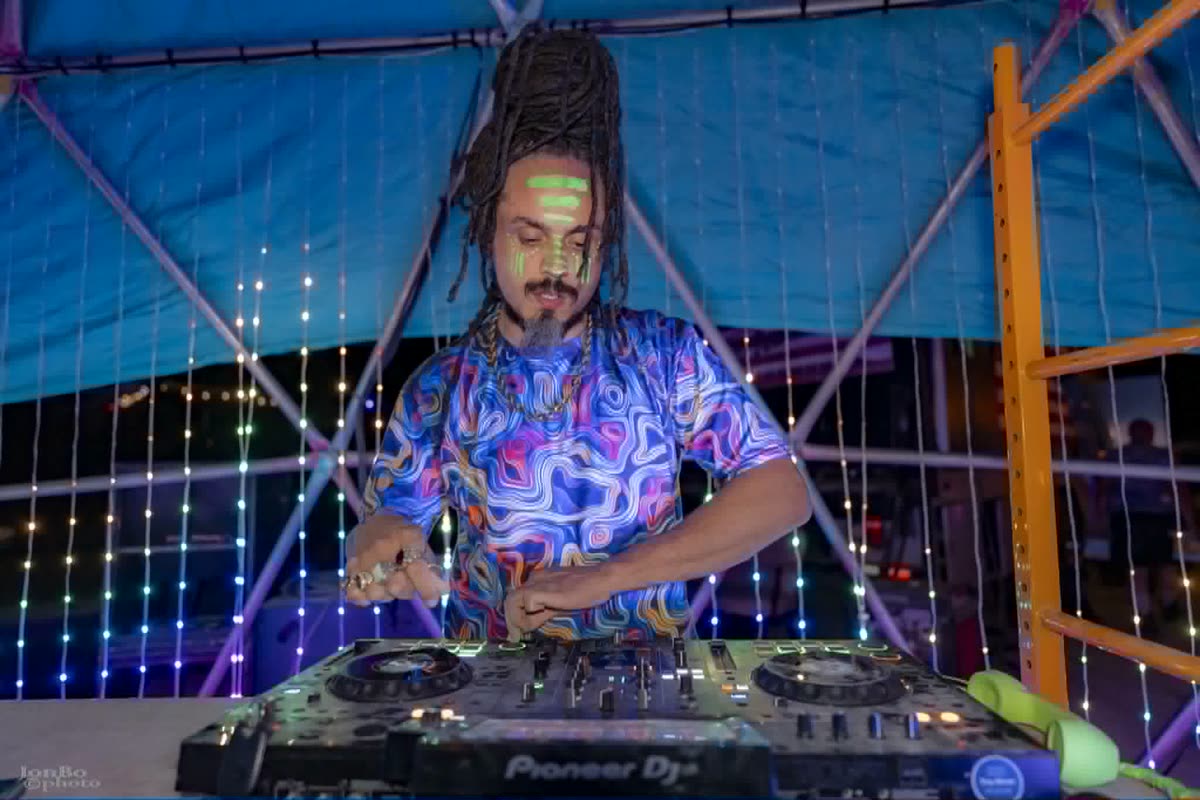
Spaceman is the founder of The Mothership Landing and the face on the markers box. Event producer, DJ, performer, designer, and structural integrator: he works with bodies by day and lights them up by night. Two decades in the transformational music festival and rave scene, in the fields and warehouses these transmissions come from. Always Keep Exploring.