First voyage?
Take 10% off your first order with code MOTHERSHIP10.
First voyage?
Take 10% off your first order with code MOTHERSHIP10.

Original art. Festival ready.
✍️ Design Stories
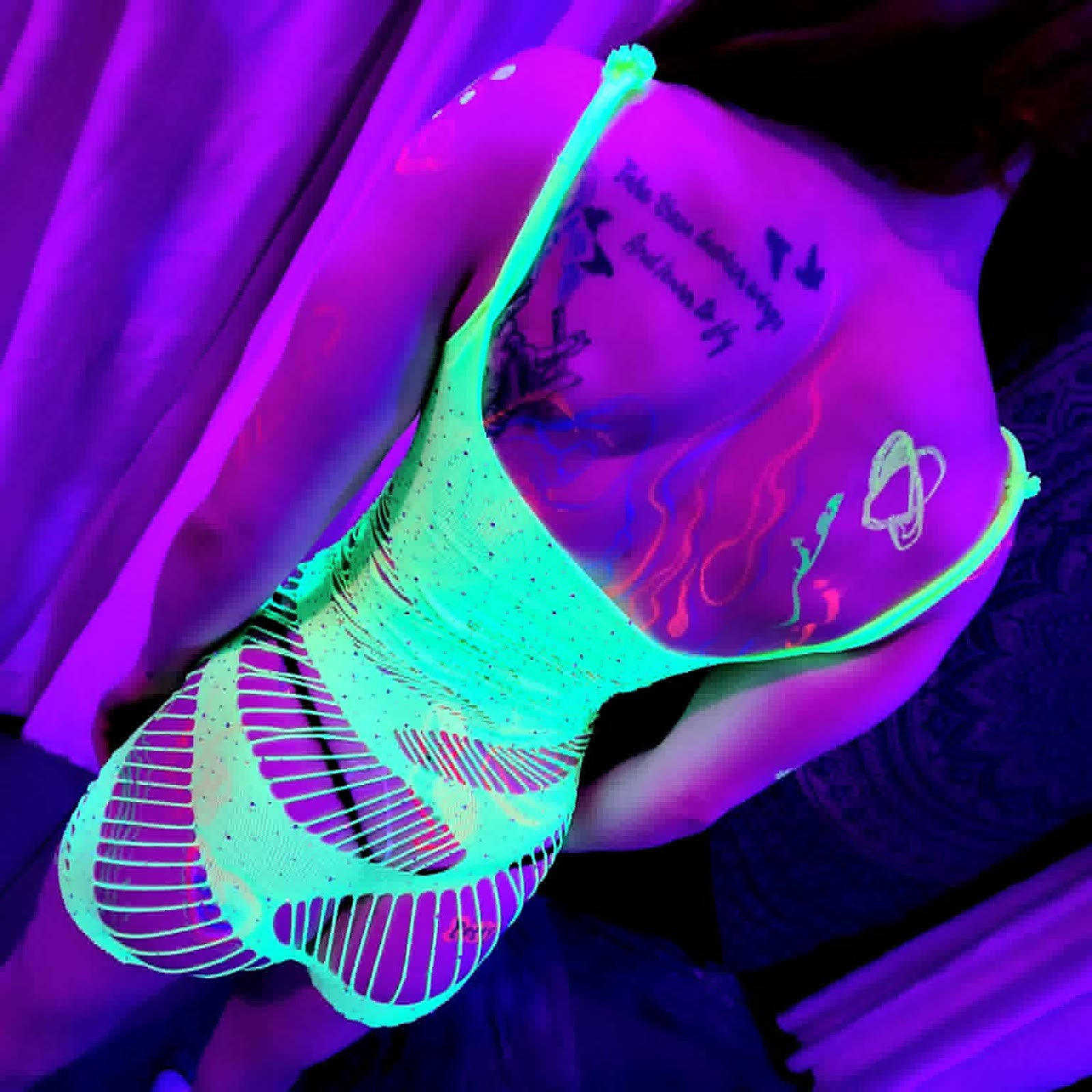
Every pattern begins as an original piece of art. A dream, an old pattern reborn, a doorway.
✍️ Design Stories
Every pattern begins as an original piece of art. A dream, an old pattern reborn, a doorway.

Wear the story.
Free Shipping on Every Order USA

June 07, 2026 6 min read
The flow arts are movement disciplines built around keeping a prop in continuous motion: poi, staff, hoop, fans, wand, and their fire and LED descendants. The oldest of them, poi, began as a Māori performance art in Aotearoa New Zealand, centuries before the first rave.
How a tethered ball from the South Pacific ended up drawing light circles in a Nevada desert is one of the better journeys in performance history. It runs through warrior dexterity legends, a Samoan knife dance, a Hungarian psychologist, and the persistence of your own retina. Spin up.
The flow arts sit at the intersection of dance, juggling, and meditation. A practitioner, most say spinner or flow artist, keeps a prop in constant motion around the body: poi (weighted balls on tethers), staff, hoop, leviwand, rope dart, fans, contact balls, and a growing family of others. The skill is not catching or throwing. It is continuity: planes, circles, and rhythms flowing into each other without seams.
The name is younger than the practice. It spread through the 2000s, borrowed deliberately from psychology: flow, the state Mihaly Csikszentmihalyi documented when he interviewed musicians, climbers, and dancers about the moments when time disappears and the doing does itself. Spinners chose the name because that state is the actual goal. The prop is just the doorway. Landing a trick is nice; losing the boundary between you, the prop, and the music is the point.
If that sounds familiar, it is the same current our Flow State design wraps in neon. Different doorway, same river.
Poi is Māori, and it is not a museum piece. The word means "ball" in te reo Māori, and the art, songs and dances performed with raupō or flax-fiber balls swung on cords, remains a living part of Māori performing arts, practiced today in kapa haka groups across Aotearoa New Zealand and performed at every level from school competitions to the national stage.
Traditionally, poi performance has been associated especially with wāhine, women, whose routines pair precise rhythmic swinging with song and storytelling. Popular accounts also describe poi as a dexterity and wrist-conditioning practice connected to warriors; how large that role really was is debated by historians, so take the warrior story as tradition reported rather than fact carved in stone.
What is not debated: when festival culture picked up tethered-ball spinning in the late twentieth century, it inherited the object, the name, and the basic vocabulary from Māori practice. Modern flow poi has evolved into its own discipline, but the lineage runs straight back to Aotearoa, and good flow artists say so. The art was a gift with a name attached. Keeping the name attached is the least the rest of us can do.
The fire half of the story enters through Samoa. The ailao, a Samoan knife dance displaying a warrior's skill, became the fire knife dance in 1946 when the great Samoan performer Freddie Letuli, performing in San Francisco, saw a fire eater and a baton twirler on the same bill and lit his blade. The fire knife dance became a Polynesian performance staple, and flaming props entered the global stage vocabulary.
Fire poi as festival culture knows it grew from those Pacific roots through the 1990s, when travelers, beach party scenes, and the early Burning Man community fused tethered spinning with fire performance. By the 2000s, fire circles, organized spin jams with safety crews, were a fixture of festival grounds worldwide, and Burning Man's fire conclave was choreographing hundreds of spinners at once.
Fire did something important to the art: it made the trail visible. A spun flame draws its own afterimage, and suddenly the audience could see what the spinner was really making, not a ball moving, but a shape persisting. Which set the stage for the technology that took over the night.
The rave scene got there by accident first. Dancers in the 1990s swung glowsticks on shoelaces, glowstringing, because it was cheap and the trails looked like sorcery under warehouse lights. When LEDs got small, bright, and battery-friendly in the 2000s, purpose-built LED poi replaced the shoelaces, and the arms race began.
Modern graphic poi push it further than most people believe until they see it: bars of programmable pixels that exploit persistence of vision, flashing precise columns of color as they sweep, so the spin paints full images, text, and animations into the air. The dark stopped being a limitation and became the canvas. Gloving grew up in the same scene, EDM light shows performed inches from one viewer's eyes, fingertip LEDs tracing patterns, an art form so potent that some festivals famously banned it for years before embracing it.
Fire made the trail visible. LED made it programmable. The next dancer you see pulling rings of light out of the dark at 2am is working a lineage that runs from flax cords in Aotearoa through a lit blade in 1946 San Francisco to firmware.
Two pieces of neuroscience conspire.
First, persistence of vision: your retina holds an impression of bright light for a fraction of a second after it moves, so a fast-moving light source does not read as a dot changing position. It reads as a line, a ring, a ribbon. The spinner is drawing directly on your visual system, using your own lag as the ink.
Second, prediction. Circular motion is deeply forecastable, and your brain rewards correct predictions; that is the same processing-fluency pleasure that makes symmetry beautiful. A skilled flow artist plays a game with that machinery: long enough in one plane to let your brain settle into the orbit, then a clean break into a new pattern. Settle, break, settle, break. It is the visual grammar of a good DJ set, tension and release, running at the speed of a wrist.
Add firelight or saturated LED color in genuine darkness, where your light-hungry rod cells are doing the watching, and the trails acquire that floating, more-real-than-real quality every festival kid knows. The flow artist is not just performing in the dark. The dark is half the instrument.
Our stake, plainly: we are a crew of performers, and we make the other half of the night kit. Flow props paint light into the air around a body; Mothership Markers paint it onto the body itself, six UV-reactive colors built by performers, made for skin. Plenty of spinners do both, lines on the arms echoing the lines in the air, one practice in two mediums. And the Flow State collection exists because the state the spinners named the whole art form after deserved a garment that moves like it feels.
The flax cord became a flame, the flame became a pixel, and the pattern is still the same: humans, given the dark, will find a way to draw on it.
Follow the flow.
Always Keep Exploring.
What are the flow arts? Movement disciplines built on keeping a prop in continuous motion: poi, staff, hoop, fans, leviwand, rope dart, and their fire and LED versions. The name comes from the psychological flow state practitioners aim for.
Where does poi spinning come from? Poi is a Māori performance art from Aotearoa New Zealand, where dancers swing fiber balls on cords in rhythm with song. It remains a living part of Māori culture, and modern flow-arts poi descends directly from it.
Who invented fire spinning? Flaming props entered modern performance through Polynesia. Samoan performer Freddie Letuli created the fire knife dance in 1946 by adding fire to the traditional ailao knife dance, and fire poi spread through travel, beach, and festival culture in the 1990s.
How do LED graphic poi display images? Through persistence of vision. Bars of programmable LEDs flash precise columns of color as they sweep through an arc, and the eye's brief retention of light merges the columns into pictures, text, or animations hanging in the air.
Why do light trails look so vivid at night? In darkness the eye's light-sensitive rod cells dominate, and a bright moving source leaves a retinal afterimage lasting a fraction of a second. Fast-moving fire or LEDs therefore read as continuous glowing lines rather than moving points.
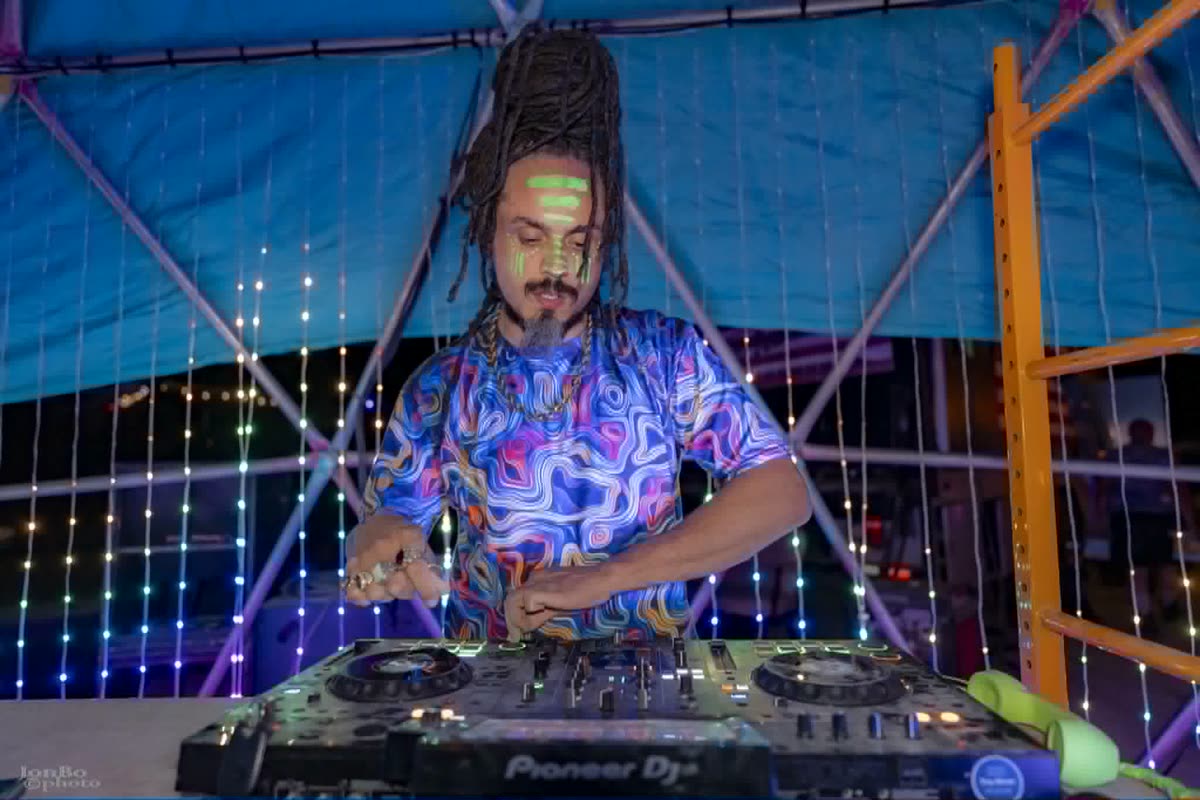
Spaceman is the founder of The Mothership Landing and the face on the markers box. Event producer, DJ, performer, designer, and structural integrator: he works with bodies by day and lights them up by night. Two decades in the transformational music festival and rave scene, in the fields and warehouses these transmissions come from. Always Keep Exploring.