First voyage?
Take 10% off your first order with code MOTHERSHIP10.
First voyage?
Take 10% off your first order with code MOTHERSHIP10.

Original art. Festival ready.
✍️ Design Stories
Every pattern begins as an original piece of art. A dream, an old pattern reborn, a doorway.
✍️ Design Stories
Every pattern begins as an original piece of art. A dream, an old pattern reborn, a doorway.

Wear the story.
Free Shipping on Every Order USA

June 07, 2026 6 min read
"Be water, my friend" is Bruce Lee's distillation of a 2,500 year old Taoist idea: power through adaptability. Water has no fixed shape, accepts every container, never fights force with force, and still wears down mountains. Lee meant it as a complete philosophy of mind, not a fighting tip.
The line is one of the most quoted sentences of the twentieth century, and one of the least unpacked. Behind it runs an unbroken current: an old Chinese sage, the sword masters of Japan, a Hong Kong fighter-philosopher, and, in a turn we will get to, a dream about being made of water. Wade in.
The source is the Tao Te Ching, the foundational Taoist text attributed to Lao Tzu, roughly 2,500 years old. Water is its favorite teacher. The highest good, it says, is like water: it benefits all things without competing, and settles in the low places everyone else avoids. And its most famous water lesson is a paradox: nothing in the world is softer than water, yet nothing is better at overcoming the hard and the strong.
That is not a riddle, it is an observation. The river does not argue with the boulder. It accepts the boulder, goes around it, and keeps arriving. Give it time and the boulder is sand. Taoists call the underlying principle wu wei, often translated "effortless action": not laziness, but action so aligned with the way things already flow that it meets no resistance. The water does not try to carve the canyon. Carving the canyon is just what flowing looks like, eventually.
Hold that thought for about two thousand years, and carry it east across the sea.
Japanese sword culture absorbed the water teaching and aimed it at the mind. The ideal was mizu no kokoro, a mind like water: still water reflects what is actually there; disturbed water distorts everything. A fighter whose mind is churning with fear or plans sees a distorted opponent. A fighter whose mind is still sees exactly what is happening, exactly when it happens.
The Zen monk Takuan Sōhō, writing to the great sword master Yagyū Munenori in the 1600s, gave the idea its sharpest edge: the mind must never stop. The moment attention fixes anywhere, on the sword, on winning, on not dying, it freezes there, and a frozen mind is a dead one. The trained mind flows continuously, touching everything, gripped by nothing, like water moving over stones.
If you read our asanoha story, you have met these people before: the same warriors who wore the hemp star for protection trained their minds to move like rivers. Protection on the body, water in the mind. They understood the kit.
Bruce Lee studied philosophy as seriously as he studied fighting, and the water teaching became his cornerstone. The famous version was delivered on Canadian television in 1971, and in his TV work the same year: "Empty your mind. Be formless, shapeless, like water. You put water into a cup, it becomes the cup. You put water into a bottle, it becomes the bottle. You put it in a teapot, it becomes the teapot. Now water can flow, or it can crash. Be water, my friend."
People quote it as a style tip. Lee meant it as a refusal of style itself. His art, Jeet Kune Do, was famously "the style of no style": the fighter who commits to a fixed form has pre-decided his answers, and the moment reality asks a different question, he breaks. The formless fighter becomes whatever the moment requires. Flow when flowing wins, crash when crashing wins, and never be findable in between.
Lee also lived the harder, less quoted half of his own line. There is a story he told about his early training: frustrated, sent out on a boat to cool down, he punched the sea, and the sea did not mind. You cannot wound water. The deepest reading of "be water" is not about hitting. It is about being unwoundable: the self that accepts, adapts, and keeps arriving.
Here is the part of the story that belongs to science, and it is better than the metaphor deserves.
Watch a wave cross open water and it looks like the water is traveling. It mostly is not. The wave is energy passing through; the water itself moves in circles. Each parcel of water rises, sweeps forward, sinks, and sweeps back, tracing a circular orbit and ending up nearly where it began. A duck on the swell does not surf away; it bobs in a circle as the energy passes underneath. Below the surface, the circles continue, smaller and smaller with depth, a column of stacked rings.
Drop a stone in a still pool and the same truth radiates outward: rings, because every disturbed water particle is orbiting, and the energy refuses to disappear, it just keeps handing itself outward, circle by circle, until the whole pond has been touched by something that happened once, in one place.
Energy that travels as circles and never quite vanishes. Keep that physics in your pocket for one more section.
Our Way of Water pattern did not start in a library. It started with a dream. The founder dreamed he was made of water, and in the dream, everything he touched moved in circles. The circles spread, overlapped, kept going. Nothing he touched stayed untouched.
He woke up and the dream turned out to be physics: touched water genuinely answers in circles, and the circles genuinely carry the touch outward beyond where you can see. What felt like dream logic is just how energy behaves in a medium soft enough to listen. Which is also, if you have ever stood in a crowd when the bass drops, how energy behaves in a dance floor.
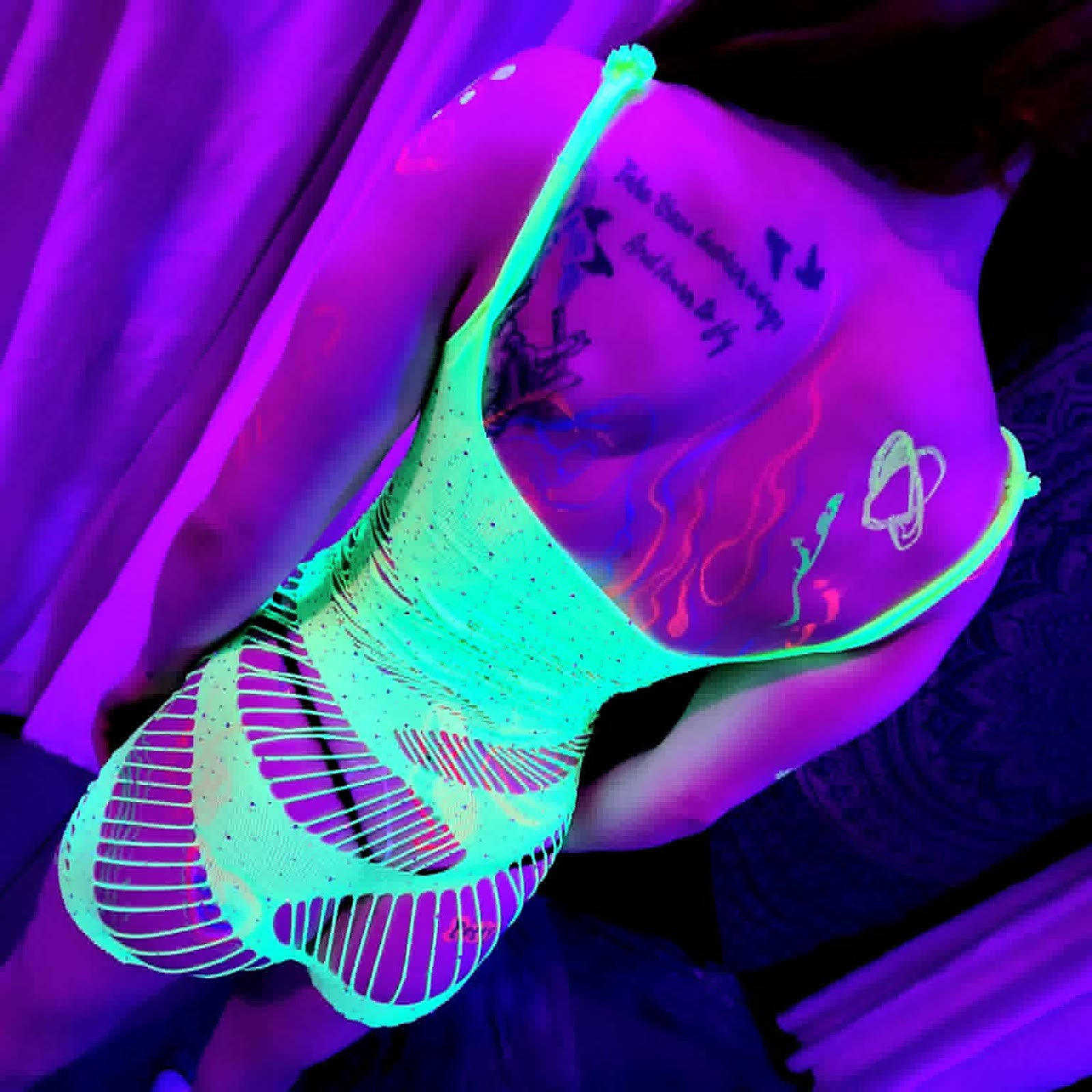
Way of Water is that dream made wearable, ripples interlocking across the fabric, every ring a record of contact. It launches our "Way of" series because it is the way under all the others: the asanoha grows, the vortex spins, but water is the medium the whole night moves through. Like everything on this ship it is cut and sewn to order, which is to say: still water until an explorer touches it.
Lao Tzu would tell you the canyon was carved without effort. Takuan would tell you not to let your mind stop on this sentence. Lee would tell you to empty your cup. The dream just says: you are mostly water already. Act like it.
Nothing you touch stays untouched.
Always Keep Exploring.
What does "be water, my friend" mean? Bruce Lee's phrase teaches adaptability as power: water takes the shape of any container, flows or crashes as the moment requires, and overcomes hard things by yielding. Lee meant it as a philosophy of mind, drawn from Taoism, not just fighting advice.
Where did Bruce Lee say "be water, my friend"? The famous delivery was in a 1971 television interview with Pierre Berton, with a near-identical version in Lee's 1971 TV series work. The idea appears throughout his private writings, rooted in his study of Taoist philosophy.
What does "mind like water" mean in martial arts? Mizu no kokoro, a Japanese martial arts ideal: still water reflects accurately, disturbed water distorts. A calm, unfixed mind perceives an opponent exactly as they are and responds without freezing on any single thought.
What is wu wei? A core Taoist principle, often translated "effortless action": acting in alignment with how things naturally flow rather than forcing against them, the way water carves stone without ever straining.
Does water actually move in circles in waves? Yes. In a passing wave, water parcels travel in roughly circular orbits, rising, sweeping forward, sinking, and returning, while the wave's energy passes through. The water stays; the energy travels.
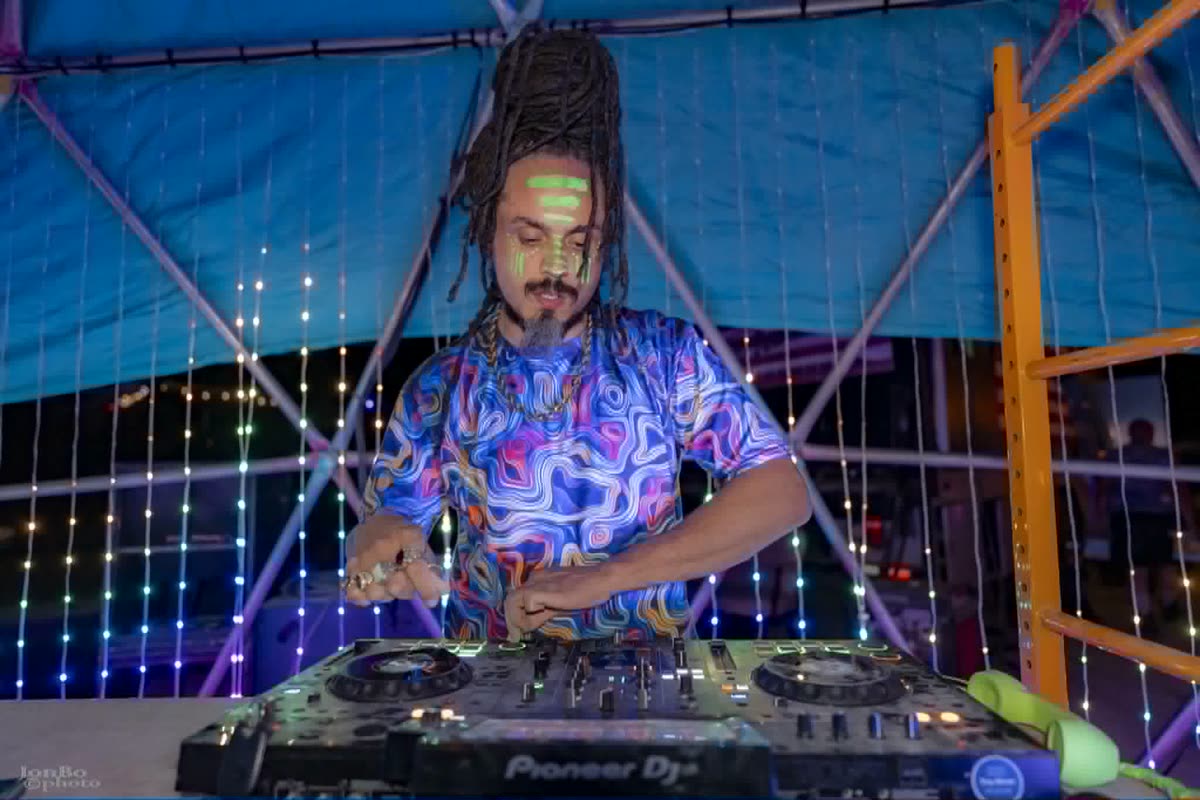
Spaceman is the founder of The Mothership Landing and the face on the markers box. Event producer, DJ, performer, designer, and structural integrator: he works with bodies by day and lights them up by night. Two decades in the transformational music festival and rave scene, in the fields and warehouses these transmissions come from. Always Keep Exploring.